
Introduction: Why Vocal Preparation Matters Before Recording
Recording a vocal track is one of the most demanding moments for any singer. Unlike live performances, the microphone captures every nuance—clarity, stability, and control become crucial. Scientific research shows that factors such as hydration, mucus buildup, and respiratory efficiency directly affect vocal performance. Preparing your voice is not just about singing scales; it’s about building the right physiological conditions for optimal sound production.
Hydration and Rest: The Scientific Foundations
Authoritative resources from the NIH—NIDCD: Taking Care of Your Voice and NIH News in Health: Take Care of Your Voice emphasize hydration, humidification, and rest as pillars of voice care. The Mayo Clinic—Laryngitis: Diagnosis & treatment and Mayo Clinic News Network—Home remedies: helping a hoarse voice likewise recommend drinking fluids, voice rest, and humidifying the air.
Hydration keeps the vocal folds lubricated, reducing phonation threshold pressure and preventing dryness.
Sleep and rest allow for tissue recovery, lowering inflammation and supporting vocal endurance.
Practical tip: drink water consistently throughout the day, and avoid dehydrating agents like alcohol or caffeine right before recording.
Nebulization with Isotonic Saline: A Proven Ally for Singers
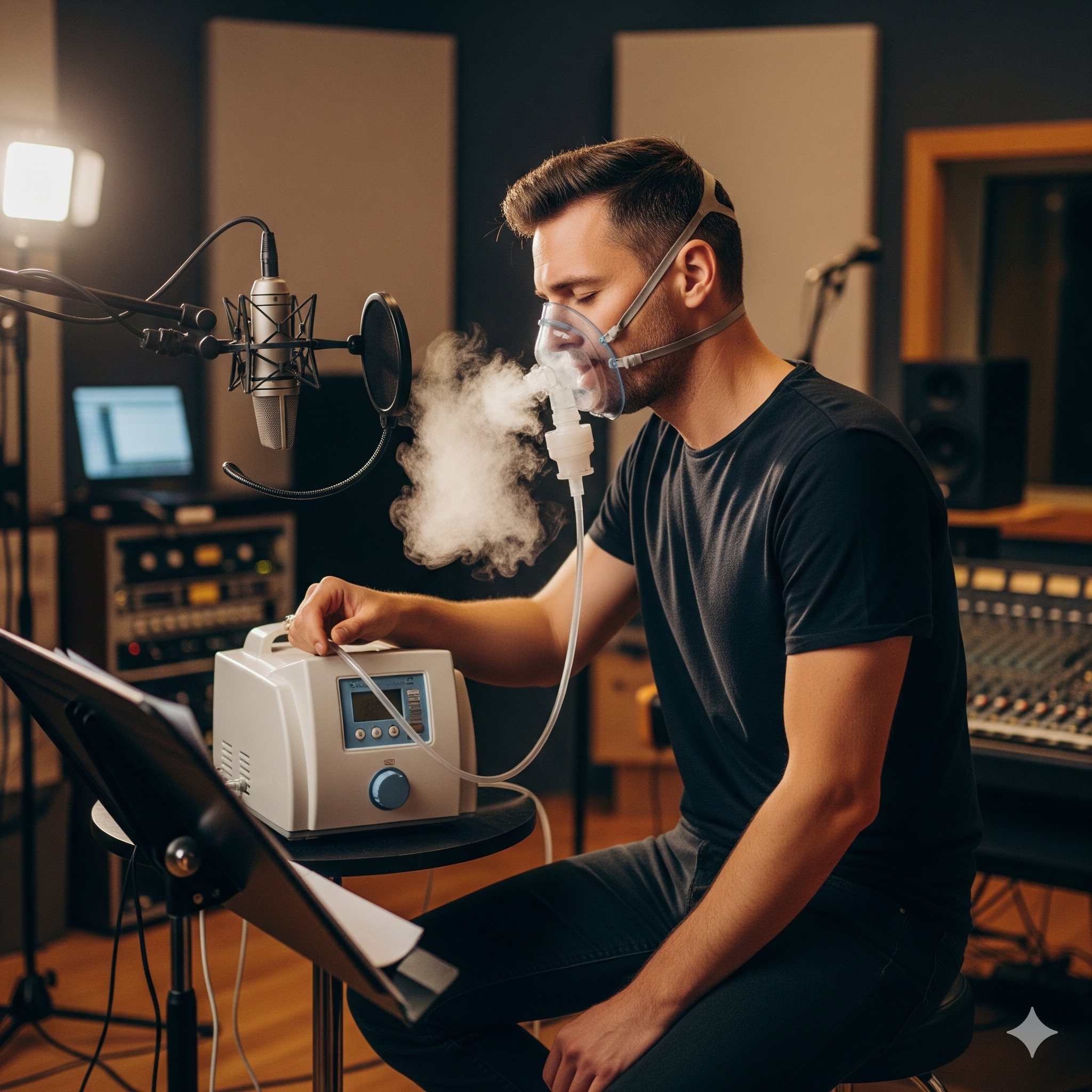
Unlike steam inhalation, which mainly hydrates the oral cavity, nebulization with isotonic saline (0.9%) delivers fine particles directly to the laryngeal mucosa. Clinical studies demonstrated:
Souza et al., 2023 — Nebulized Saline Solution: A Multidimensional Voice Benefit (PubMed).
Tanner et al., 2016 — Laryngeal Desiccation Challenge and Nebulized Isotonic Saline in Healthy Male Singers and Nonsingers (BYU ScholarsArchive—download page); PubMed.
These studies showed:
- Improved mucosal wave amplitude of the vocal folds.
- Reduction in perceived phonatory effort.
- Enhanced acoustic and/or aerodynamic parameters.
For singers, this means easier onset, smoother phonation, and reduced fatigue during long recording sessions.
Clearing Excess Mucus: OPEP Devices (Aerobika® and Acapella®)
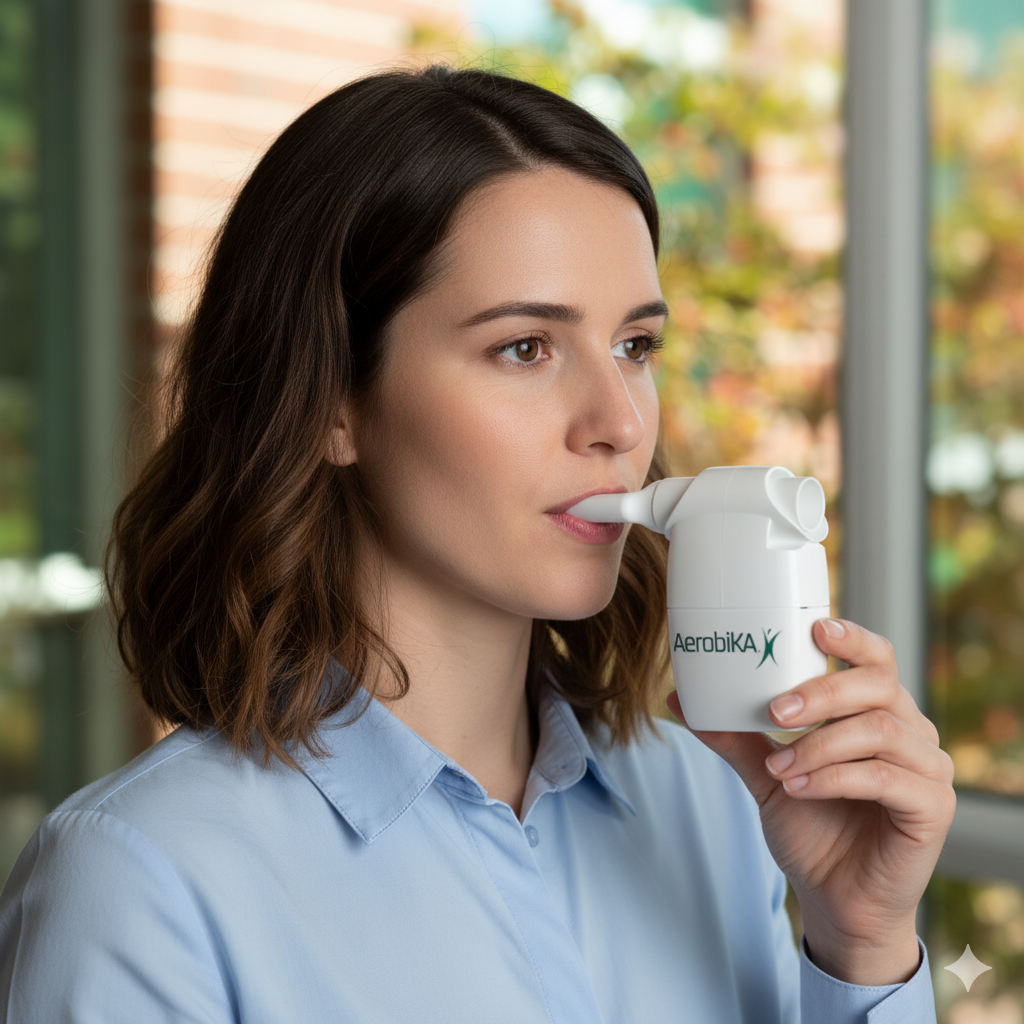
Excess mucus can compromise vocal fold vibration, creating instability and unwanted noise in recordings. Here is where Oscillating Positive Expiratory Pressure (OPEP) devices like Aerobika® and Acapella® play a role.
Clinical evidence (airway clearance, fewer exacerbations, better function):
Aerobika® real-world outcomes in obstructive lung disease (Pulmonary Therapy): SpringerLink article.
Acapella® in mucus clearance and lung function (overview via Chest treatment pages and related clinician guidance).
Indirect vocal benefit: While no study has tested OPEP devices on singers, it is scientifically reasonable to suggest that reducing mucus and optimizing airflow creates a cleaner, freer environment for voice production.


Final Takeaway
Preparing your voice for recording is about more than warm-ups. The strongest evidence points to a multi-layered approach:
- Hydrate and rest (reinforced by NIH and Mayo Clinic).
- Use saline nebulization for direct vocal fold hydration (Souza; Tanner).
- Consider OPEP devices (Aerobika®, Acapella®) to manage mucus.
- Explore structured systems like the Breathe Method to integrate healthy habits into a consistent routine.
- Practice targeted breathing and vocal warm-ups.
- Maintain a lifestyle that supports lung and vocal health.
By combining these strategies, singers can create the best physiological conditions for recording—where the microphone captures not just sound, but artistry at its fullest potential.