
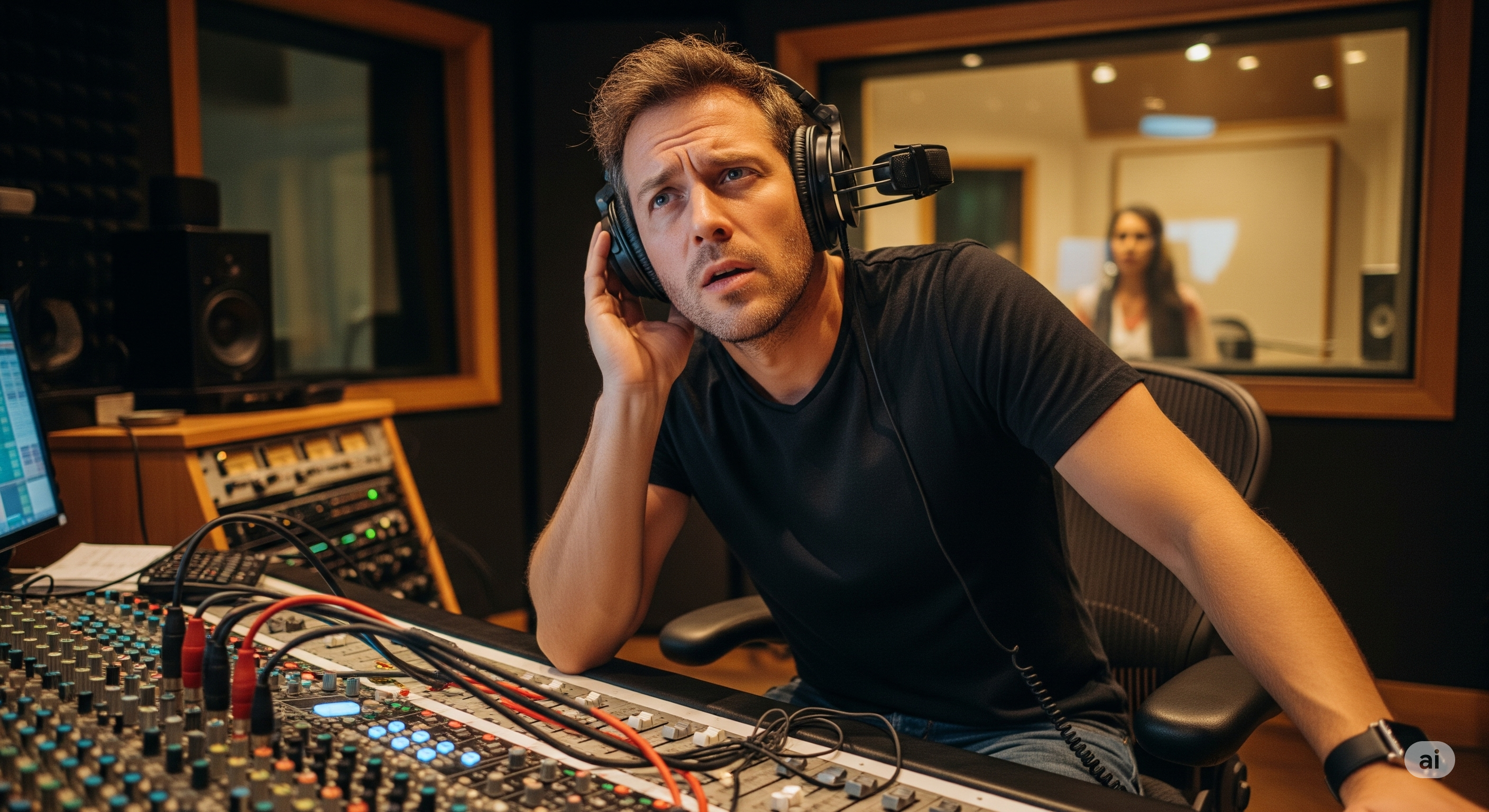
Musician in studio with headphones

How to Protect Your Ears in the Studio (Beyond Using Headphones)

After 20 years in professional audio, I realized the ear is the most important instrument.

I've worked for decades with the best microphones, preamps, and protective headphones. I've always taken care of my hearing. But even so, I started noticing signs:

  • Light tinnitus after long sessions;
  • Difficulty focusing on sound in noisy environments;
  • A "foggy" feeling in the brain, as if my mind was tired from processing sound.

Protective headphones are essential — but they're not enough.

The inner ear is a fragile structure, sensitive to oxidative stress, chronic inflammation, poor blood flow, and nutrient deficiencies.

And it was through research that I discovered something crucial:
There are nutrients with scientific backing that protect auditory neurons and promote long-term hearing health.


From Live Shows to Mixing: Two Worlds, One Common Enemy

Have you ever left a concert wearing ear protection and still felt a slight ringing? Or spent 8 hours mixing and ended up with a "blocked" ear, as if your brain was exhausted?

They seem like different situations — and they are. But their effects on the auditory system are nearly identical.

🎧 Fatigue from Mixing

Here, the enemy is continuous mental effort. You're separating frequencies, adjusting stereo balance, identifying distortions. Your brain works at full capacity to process every detail.

Study: Kujawa & Liberman (2009) shows that loss of auditory nerve fibers can occur without noticeable hearing loss — just neural fatigue. Read Study

🔊 Fatigue from Live Shows

At a live show, the enemy is sound pressure. Even with ear protection, your body feels vibration and low-frequency impact. Physical stress directly affects the hair cells in the cochlea.

Study: Le Prell et al. (2008) shows that prolonged exposure to high SPL causes synaptic damage, even with attenuation. Read Study

Both lead to auditory fatigue: a tiredness that affects not only the ear but the brain. And that's why protective headphones, while essential, are not enough.

Disclosure: As an affiliate, we may earn commissions from qualifying purchases made through links on this site. This comes at no cost to you and supports our mission to deliver honest, in-depth travel and wellness insights. We only recommend products and services we genuinely trust.

cropped cropped logo transp removebg preview 1.png